Home ↑
Early Prototype • May 2022 - Dec 2022

OO Admin Tool

I designed an admin "Mission Control" tool that transforms complex epidemiological parameters into a guided configuration workflow and provides real-time visibility into system health during live simulations.

Role

  • UX/UI Design Lead
  • Information Architecture
  • System Design
  • User Testing

Team

  • Lab PIs (Product Managers)
  • 3 Engineers & 2 Designers
  • 5 Bioinformatic Researchers

Partners

  • Broad Institute
  • UMass Chan
  • Teachers & Coordinators

Keywords

  • Real-Time Simulation
  • Enterprise Dashboard
  • Crisis Management
  • Workflow Automation

Managing Complexity

Running a live epidemiology simulation is operationally complex: facilitators must configure scientifically valid scenarios, monitor fast-changing system behavior, and intervene at the right moment.

The goal was to design a centralized "Mission Control" that makes complex epidemiological modeling accessible to non-technical educators. This early design phase focused on establishing a scalable architectural foundation for the simulation ecosystem.

Configuration Paralysis

Setting up a valid simulation required adjusting many interdependent variables—such as transmission rate and population density—leading to high cognitive load and a risk of setup error.

Monitoring Blind Spots

During live runs, facilitators lacked a clear way to understand system health or participant behavior in real-time, making it difficult to know when to intervene.

Foundational Logic

These early prototypes established the user flows and information architecture that informed the tool's current implementation by the Fathom design team. By mapping out complex epidemiological logic into a human-readable interface, we moved the project from abstract research into a viable product roadmap.

~80% Reduction in pre-communication overhead for configuration settings.
Validated Core architectural handoff for the current development team.
0 to 1 Transformation of bio-data into actionable admin workflows.
Scalable Flexible framework supporting both expert and novice user tiers.

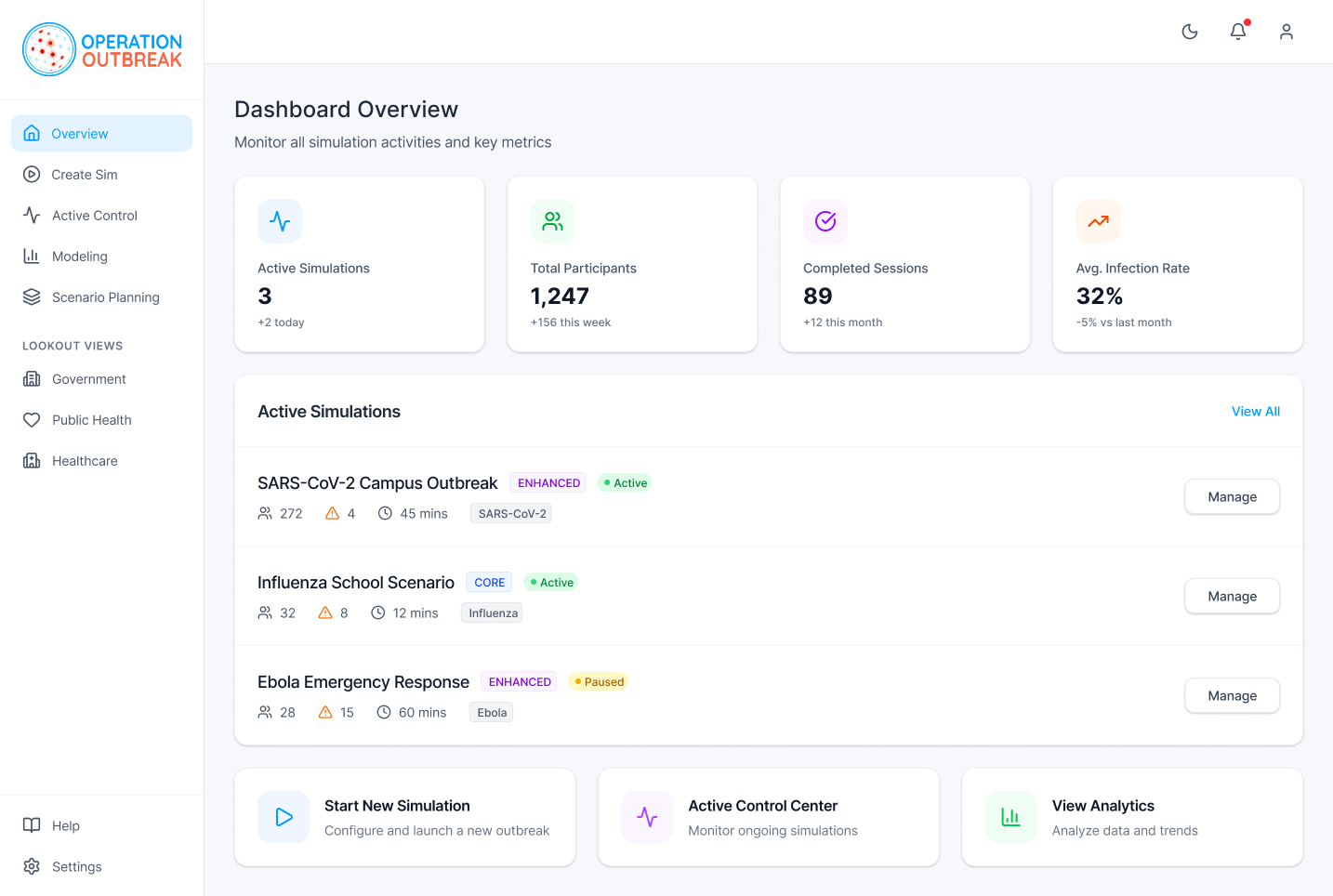
Central Command Center

A unified, glanceable interface that aggregates system health, participant activity, and key metrics. This reduces noise and allows facilitators to quickly assess stability and prioritize action.

Result: Improved situational awareness and faster decision-making during live simulations.
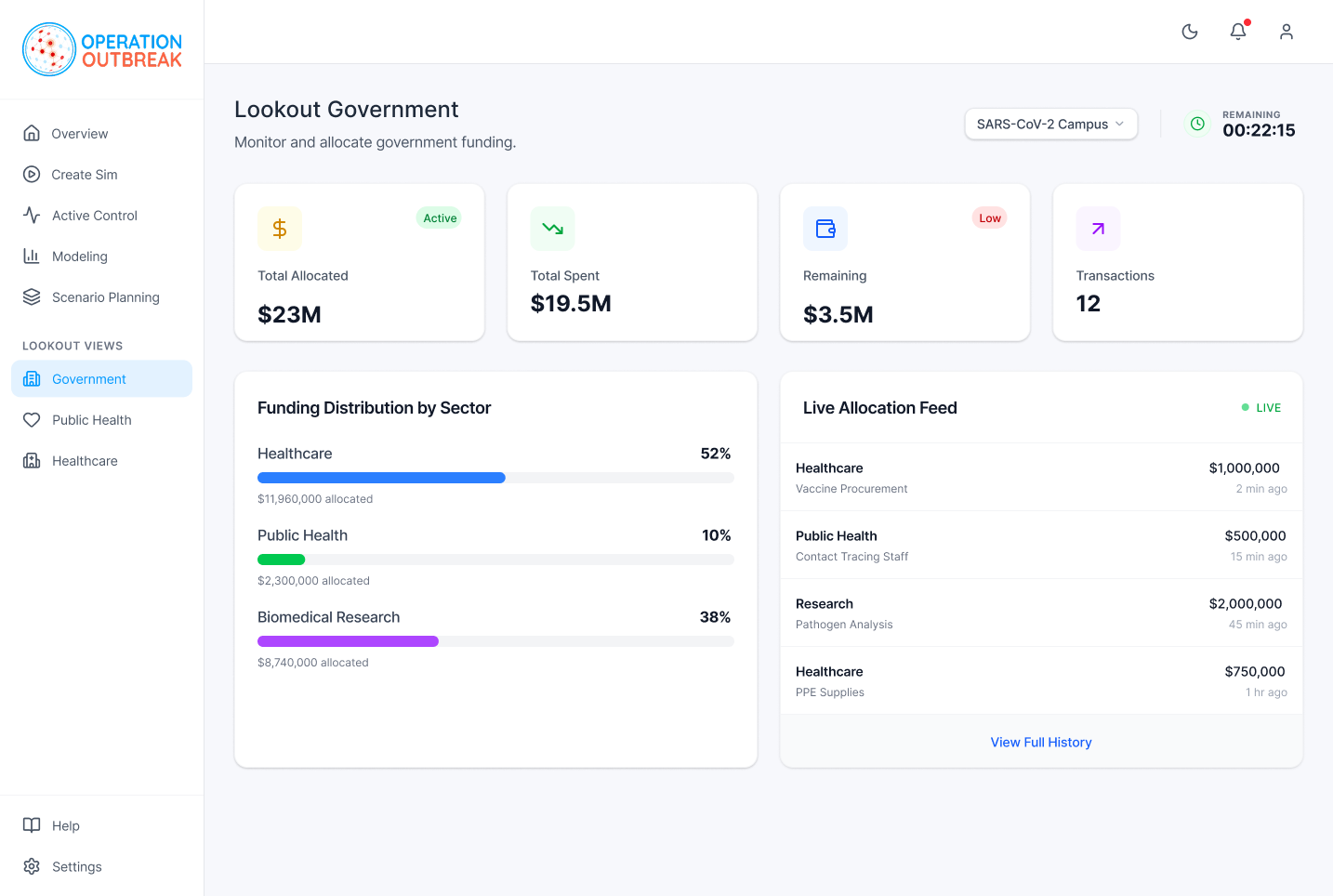
Policy Efficacy Monitor Prototype

Structured Configuration Wizard

A step-by-step setup flow that converts complex epidemiological parameters into a guided process with built-in validation.

Result: Prevented invalid configurations and significantly reduced setup errors and cognitive load.

Real-Time Intervention Deck

A control layer that provides immediate access to high-impact actions such as pausing simulations or issuing alerts.

Result: Reduced response time during critical moments and enabled facilitators to stabilize simulations before failure states occurred.

Simulation Diagnostic Tool

A visualization layer that compares predicted epidemiological curves with real-time outcomes.

Result: Enabled researchers to validate model behavior and adjust parameters when simulations deviated from expected patterns.

Advanced Configuration Management

A tiered system for expert users that supports deeper experimentation and "what-if" scenario testing without overwhelming standard workflows.

Result: Balanced usability for educators with flexibility for researchers.

Policy Efficacy Monitor

Visualizes how participant decisions—such as lockdowns or resource allocation—affect infection spread and system stability.

Result: Made abstract policy effects visible and strengthened learning outcomes during simulation debriefs.

Policy Efficacy Monitor Prototype

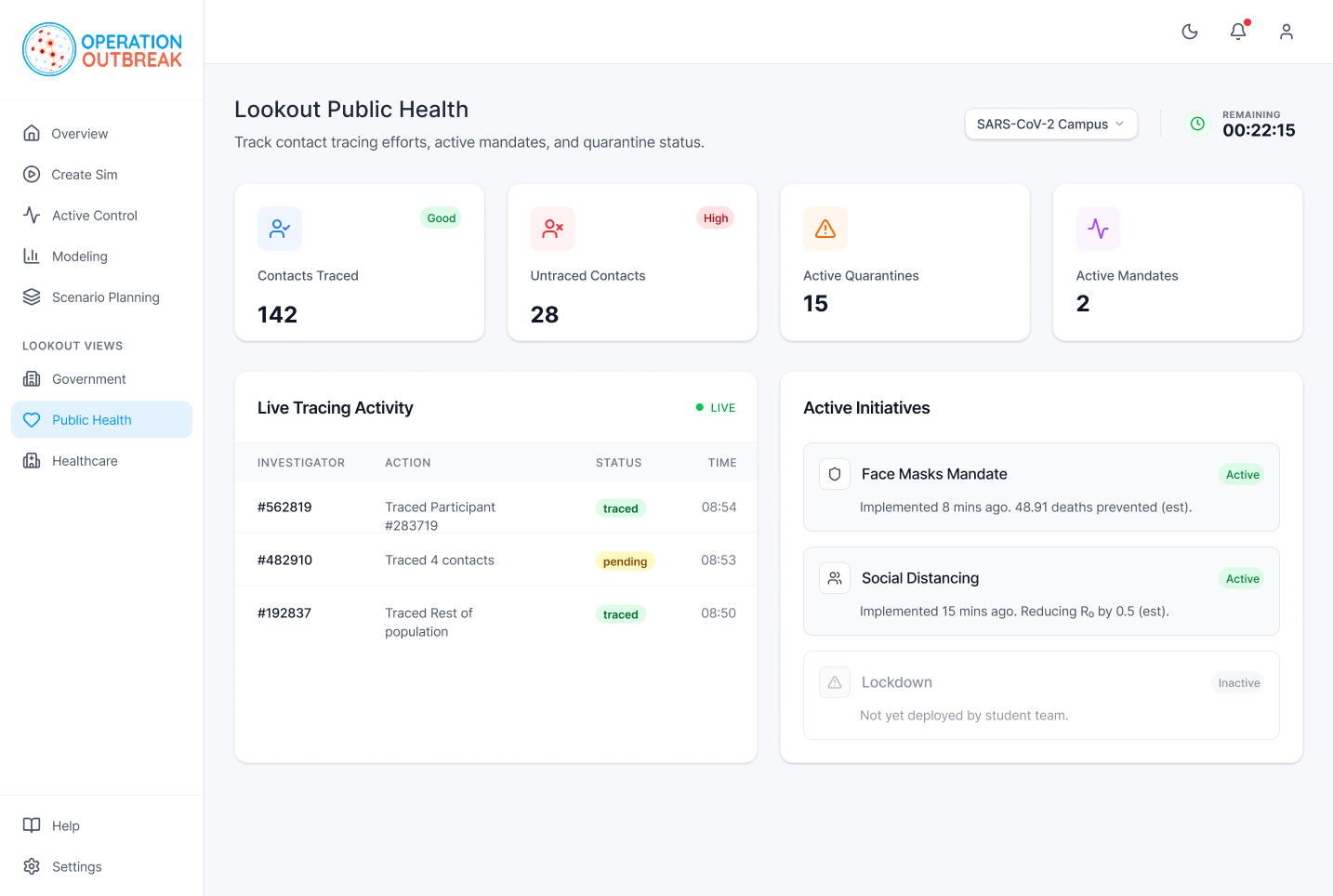
Containment Strategy Tracker

Tracks biological and operational indicators such as infection rates, testing coverage, and contact tracing performance.

Result: Helped facilitators identify weaknesses in containment strategy and guide intervention timing.

Capacity Monitoring & Warning System Prototype

Capacity Monitoring & Warning System

Monitors critical thresholds (e.g., hospital capacity) and surfaces early warning signals of system collapse.

Result: Enabled proactive intervention and prevented simulation failure.

Threat Management Center

Centralizes critical alerts and maintains a full audit trail of interventions for post-simulation analysis.

Result: Improved operational control and supported structured evaluation after each run.

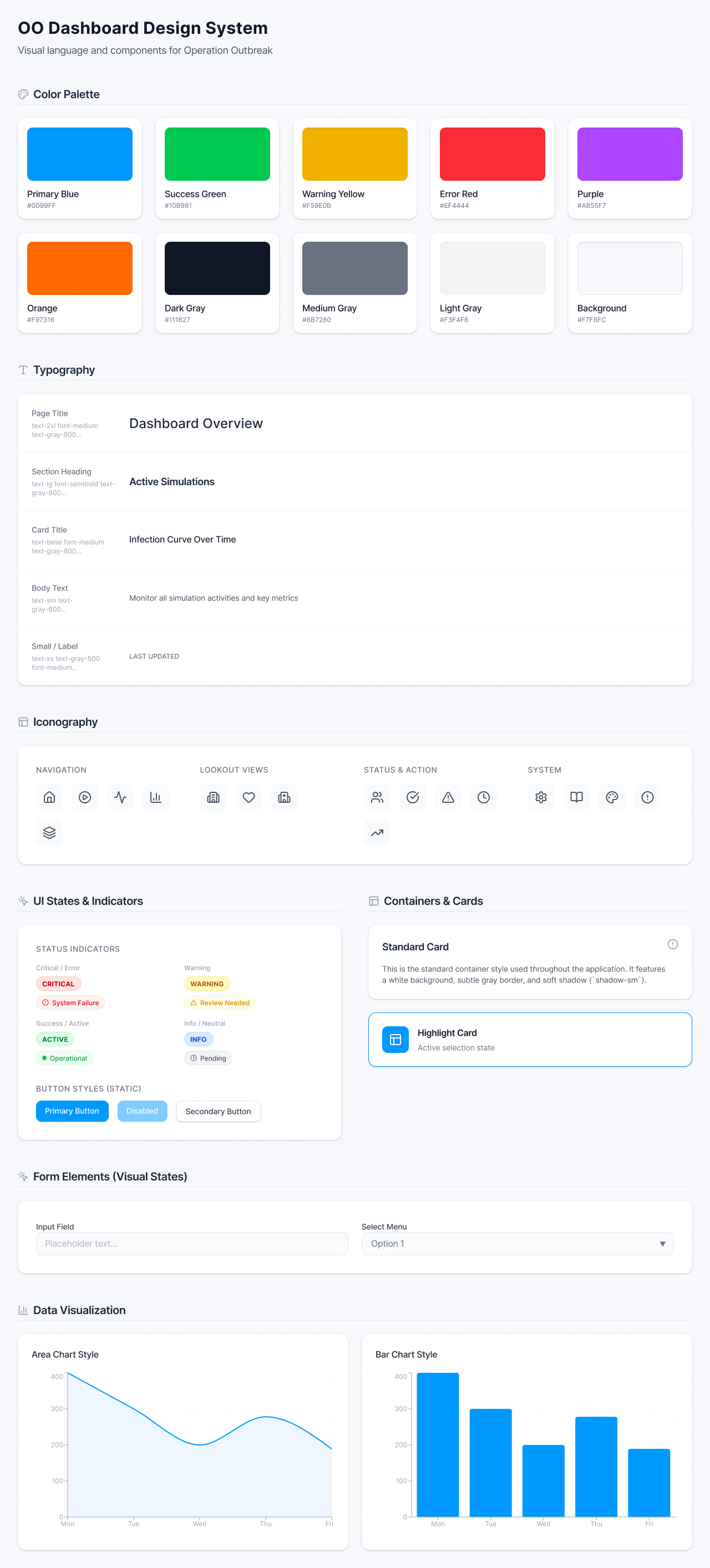
Styling Guide

design system